



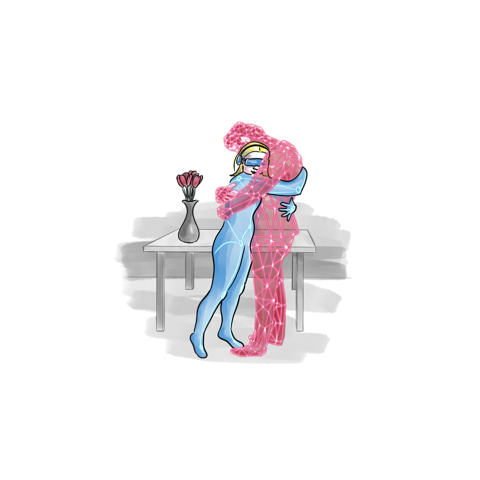

Our world is changing faster than ever. But rather than proactively dealing with the implications of these changes, we often keep getting distracted by urgent day-to-day business.
A Scenario Sprint solves this dilemma: within just a few weeks, you can translate your strategic questions into tailored scenarios that are relevant for YOUR organization. Anticipate possible disruptions as well as tidal shifts in the market. Develop actionable responses that turn uncertainty into competitive advantage.
Since the emergence of generative AI, the methodology has been upgraded to provide Scenario Sprints with GenAI support. This dramatically reduces the effort for the scenario team, as it is largely replaced by Generative AI. However, an experienced human facilitator is still needed to achieve high-quality scenario output (although even that may change with future generations of AI models).
Who has used Scenario Sprints and related methodologies*






* Includes shorter formats like Lightning Scenario Sessions and longer formats that, for example, use Scenario Sprints as a key input for strategy development.
The Scenario Sprint process
A Scenario Sprint has five phases, all supported by GenAI. The process can be completed within a couple of weeks or spread over a longer period of time, if preferred.
These are the five phases (last updated 2026):
1. Define scope, goals and context

2. Analyze trends & uncertainties

3. Develop scenario worlds
4. Share scenarios & explore impacts

5. Translate impacts into action
Scenario Sprints are like launch pads to the future
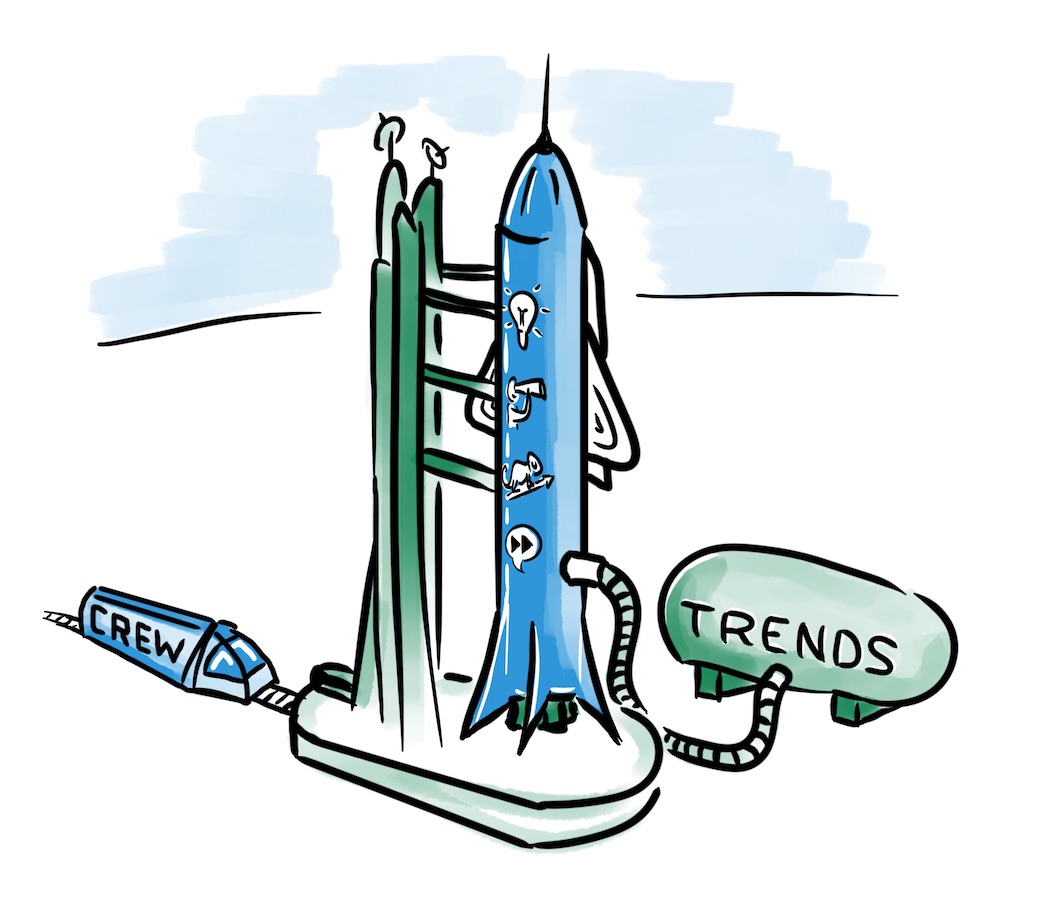
Looking at your organization or business from the future is like observing earth from space – it may give you a whole new perspective on what’s important. In that sense, a Scenario Sprint in itself can already be a revelation. To have lasting impact, however, you need to do something with these new insights.
Think of scenarios like satellites in space that give you a bigger picture. A satellite can provide climate change data or facilitate global positioning and communications. Correspondingly, scenarios can help you see when trends get real traction, or which business model may soon become obsolete. However, what ultimately counts is what you do with it – the actions you take to differentiate, and the impacts you make on the ground.
Here are our suggestions:

1. Adapt to the future
Develop adequate scenario responses if you realize that your current strategy or organization will underperform or even fail within certain scenarios. Implement no-regret moves and contingency measures before the future hits you.
2. See trends earlier
Some trends are hyped for years, sucking in investments like black holes – until they suddenly really take off. If you know what signals to look for, scenarios can act as your “folly detector” and help you determine the right time to act.

3. Leverage ideas from tomorrow
Many great ideas seem outlandish at first but obvious in hindsight. Scenarios feature customers from the future. Why not just skip the phase of ignorance by testing big ideas with customers from the future rather than the present?

4. Be a thought leader
In our global, interconnected economy, ecosystems are increasingly critical for success. Engage with your ecosystem to realize a joint desired future by sharing and discussing the scenarios.
Recent advancements in GenAI are revolutionizing not only how scenarios are built, but also how they are used and translated into action: Scenarios are becoming smart. AI-powered scenarios can answer follow-up questions and even let you engage with virtual personas representing perspectives from the future. GenAI turns scenarios from static tools into dynamic systems for exploring options, testing decisions, and uncovering actionable insights.
Example: Scenario Sprint
The Pandemic Aftermath – Four Scenarios for 2030
As the coronavirus continued to spread in early 2020, it became more and more apparent that the pandemic might have lasting, unprecedented effects on our economy and societies. To explore these long-term consequences, we started a Scenario Sprint on March 23, 2020. The week after, we began publishing the four scenarios that we had just created:

The scenarios are based on dozens of trends and diverse uncertainties spanning across economical, societal and technological domains. Looking back after a few years, these scenarios showcase the strength of Scenario Sprints, having anticipated many developments that have unfolded in various ways.
 Meanwhile, we have developed ‘Emilia’, an AI representation of a 22-year-old student living in the future. You can chat with her to explore her attitudes, challenges, and dreams, all shaped by the specific scenario world she inhabits.
We also created an AI-powered ‘Time Machine’ for the Pandemic Aftermath scenarios, designed to answer questions about these scenarios and their potential implications.
Contact us for more info or a demo of ‘Emilia’ or the ‘Time Machine’.
Workshop: LIGHTNING SCENARIOS
Imagine the future within 4 hours
A ”Lightning Scenario” workshop is a condensed 4hr-version of a Scenario Sprint. By combining relevant trends and uncertainties, teams of 4-6 people will create four scenarios and explore their implications:
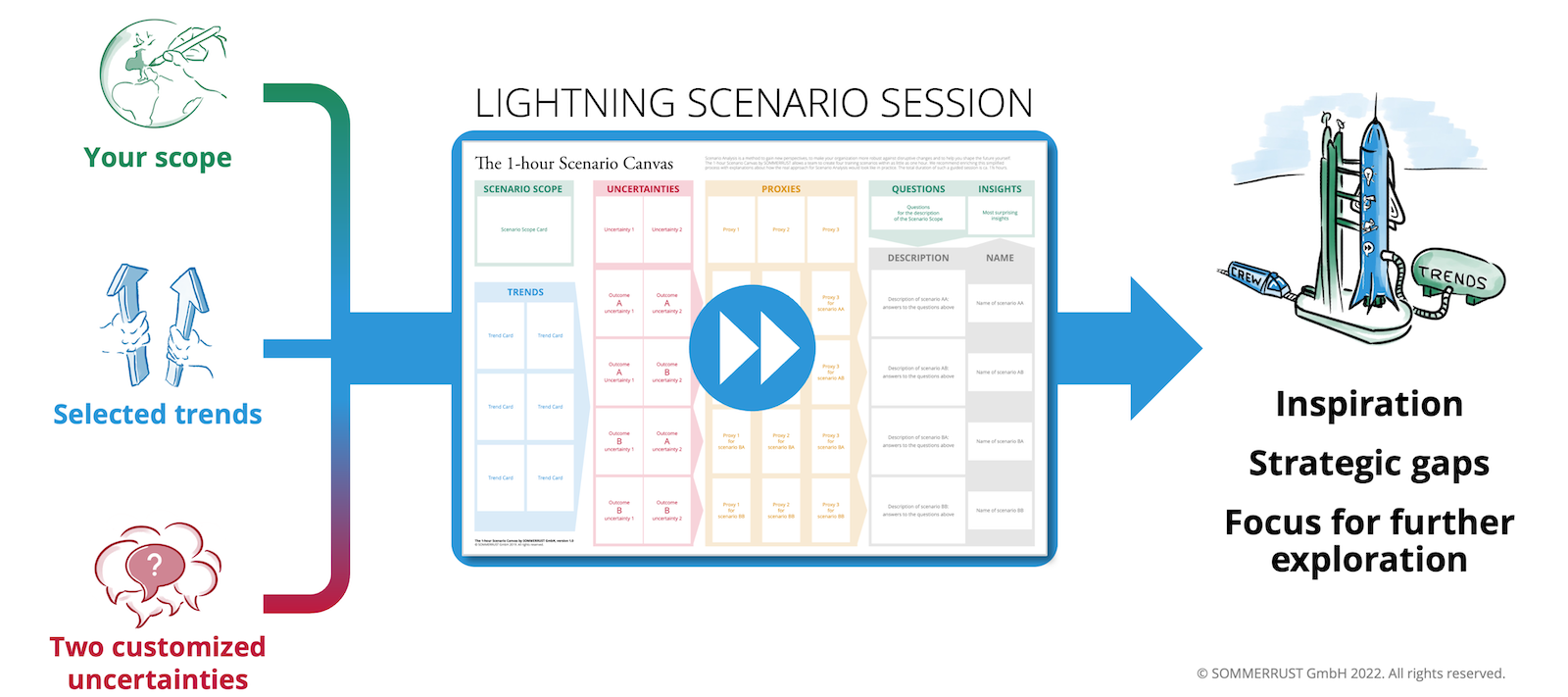
You will get new inspirations based on future customer needs and use cases, uncover potential strategic gaps and blind spots in your business model and reveal focus areas for further exploration.
It is a great starting point to try the scenario method but won’t substitute the in-depth analysis quality of a full Scenario Sprint.
Frequently Asked Questions
What if I am still unsure whether scenarios are the right tool for me/us?
Start by asking yourself these five key questions about your organization, department, or product:
- Does your industry or market face significant uncertainty? (e.g., potential regulatory changes, technological disruptions, evolving customer needs, supply chain risks, or competitive pressures)
- Do you need to make important decisions that depend on how these uncertainties unfold? (e.g., deciding on research priorities, business model designs, planning product launches, or restructuring operations)
- Is it critical to align your organization or key partners on shared priorities? (e.g., setting a strategic direction, identifying key investments, or strengthening your ecosystem)
- Could you benefit from fresh perspectives on new opportunities? (e.g., tapping into the massive knowledge base of LLMs or gaining a holistic view of trends and uncertainties)
- If you had a crystal ball, what would you want to know about the future? Would you pay a lot for the correct answer?
While a Scenario Sprint can’t offer a magic crystal ball—even with GenAI—it provides the next best thing: a systematic exploration of what the answers might be. If you answered “yes” to several of the questions above, a Scenario Sprint can help you gain clarity on no-regret moves, identify options to mitigate critical risks, and uncover actionable steps to seize opportunities that others might overlook.
How exactly does a Scenario Sprint with GenAI differ from the original method?
Methodologically, scenario building with and without AI support is quite similar. The main difference is that most of the former workshop tasks are performed with Generative AI rather than by a team of human workshop participants. Scenario Sprints are much faster than traditional scenario projects, and the use of GenAI further reduces the client team’s effort for scenario development by up to 80%. In both cases, an experienced facilitator is needed for guidance, to challenge results, and to ensure the quality of the final output.
For example, ChatGPT can be used to generate trends, uncertainties, scenario narratives and impact analyses. AI image-generation tools help visualize future worlds. Based on our experience, scenarios created with AI are similarly creative and sophisticated compared to the ones built by a competent scenario team. The only disadvantage is that the learning effect for the scenario team is somewhat lower, as they no longer have to go through the entire thought process themselves.
The latest evolution of the Scenario Sprint goes one step further. Rather than stopping at scenario creation and analysis, GenAI is used systematically to translate scenario implications into concrete strategic options. This enables teams not only to explore possible futures but also to identify practical actions they can take today to prepare for them.
Is it possible to do some kind of “trial” before we commit to a full Scenario Sprint?
Yes. Because many people have little or no previous experience with scenario analysis or would like to get a better understanding how our approach works in practice, we have developed the “Lightning Scenario” format. It follows the same principles as a Scenario Sprint, but takes various shortcuts to compress scenario building and the discussion of implications on the organization to a 4-hour workshop. For example, it uses predefined trends and uncertainties that can be customized for your specific strategic question.
What is the difference between the various scenario methods?
We use three different kinds of scenario methods: (1) 1-hour Scenario Training, (2) Lightning Scenario Workshop, (3) Scenario Sprint. The following table gives an overview of the main characteristics compared to a large “traditional” scenario planning project (it still refers to the original Scenario Sprint without GenAI):

How flexible is the schedule of a Scenario Sprint?
It is highly flexible and can be completed within a couple of weeks or stretched out if preferred. With GenAI doing much of the work, the full sprint team (typically four to seven people) only needs to participate in a one- or one-and-a-half-day in-person workshop. A smaller core team (typically one to three people) meets with the facilitator a few times to align on the project and ensure the resulting scenarios cover the relevant aspects of the future. These meetings can be held virtually.
Because it is important for key people to participate in the workshop, the main constraint on the project schedule is often participants’ full calendars rather than the scenario work itself.
Who needs to participate in a Scenario Sprint from our side?
The core team should consist of 4 to 7 people that have a good overview of the key topics and uncertainties that your organization is facing. Ideally, key decision makers are also part of the team. Otherwise, they can be integrated together with a larger group of other relevant stakeholders during the last phase of the Scenario Sprint. If you are doing an AI-supported Scenario Sprint, one or two people can be enough to define the scope and make sure that the key strategic questions are clear. For the scenario workshop at the end, however, a broader involvement of key decision makers and stakeholders is essential for reaping the benefits of the scenarios. GenAI offers many options to share the finished scenarios more broadly across the organization.
How expensive is a Scenario Sprint?
You didn’t expect a specific number here, did you? What we can say is that because a Scenario Sprint takes only a tiny fraction of the time of a traditional scenario project, it is also an order of magnitude less expensive. An AI-supported Scenario Sprint is even more cost-effective — especially if you consider the time saved on your side (one or one-and-a-half workshop days instead of five).
How reliable are the scenarios?
They can be highly reliable. There are quality checks built into the process — both in the AI and the “human” version. However, we do not aim for “decision scenarios” that are based on sophisticated quantitative models. Instead, you will arrive at “learning scenarios” that help you ask the right questions, not give you the final answers. What you shouldn’t expect in any case are predictions. Scenarios are built to be plausible but unlikely (by design, as each scenario combines various different outcomes of uncertainties!).
Do we need to have experience with foresight methods to do a Scenario Sprint?
No. Capable facilitators can guide you through the process, even if you haven’t done something similar before.
We already have corporate scenarios for the entire company – does it still make sense to do a Scenario Sprint?
In many cases, yes. There are many potential use cases within large companies (different products, markets, technologies, internal topics, …). Hence, corporate scenarios will often be too generic to provide real guidance. In contrast, the outcome of a Scenario Sprint is tailored to your strategic challenges. Because Scenario Sprints are so efficient, they can be run even for rather specific topics or single departments. Scenario Sprints are intended to cover the 99% of use cases that corporate scenarios cannot.
Aren’t scenarios mere intellectual exercises?
For the learning scenarios themselves, you could probably say that. That’s why we don’t stop there: What matters in the end are the actions you take based on your insights. To make this easier, we have developed tools and methods that seamlessly build on the Scenario Sprint process to develop your “Future Action Portfolio”.
GenAI also opens up groundbreaking new possibilities: With relatively little extra effort, you can make your scenarios interactive. You can create custom AI assistants using the generated scenario knowledge. For example, the AI will then be able to answer questions about the future based on your specific scenarios. Guided processes to develop scenario-based ideas or to explore specific strategic questions are also possible (and much more).
You have questions or would like a demo?
Contact our Scenario Sprint experts from SOMMERRUST:
If you want to find out if Scenario Sprints are for you, we are happy to schedule a free “clarification meeting” (30-minute phone or video call) with you or your team. During the call, we consider the decisions you have to take, what makes them challenging, and how a Scenario Sprint could help.
About
The Scenario Sprint process on this website has been developed by the innovation consultancy SOMMERRUST GmbH. It was born based on three core beliefs:
BELIEF NO. 1
If done properly, traditional Scenario Planning generates enormous value. But it requires far too much time and effort in the vast majority of situations where scenarios would be useful.
BELIEF NO. 2
Strategy and Innovation should not be completely delegated to strategy or innovation departments (or worse even: consultants). Deciders should be part of the strategy/innovation process rather than just evaluate and decide about the outcome.
BELIEF NO. 3
Like images taken with smartphone cameras rather than a professional high-end camera, a Scenario Sprint may not match the depth and detail of a full-scale, traditional scenario project. But it will be good enough. And just as AI has dramatically improved smartphone photography, GenAI is enabling Scenario Sprints to deliver richer, more relevant insights than ever before.
Finally, strategy development arrives in the modern world of fast and flexible innovation methods…
© SOMMERRUST 2021-26 – Imprint – Privacy Policy